Last week we wrote about DeepSeek V4. This week it is Kimi K2.6, from Moonshot AI. Two Chinese open-source models launched a week apart, both competing with GPT-5.4 and Claude Opus 4.6. But while DeepSeek V4 stands out for its 1M token context, Kimi K2.6 excels at something else: long-duration autonomous execution.
K2.6 can execute complex tasks for over 12 hours straight, with 4,000 tool calls and zero human intervention. That is not an incremental improvement. It is the difference between an agent that helps you with a specific task and an agent that works for you while you sleep.
1. What is Kimi K2.6
Kimi K2.6 is a 1-trillion-parameter Mixture-of-Experts language model from Moonshot AI (Beijing). It was released on 20 April 2026 as an open-weight model under a Modified MIT Licence.
The key technical specs:
| Feature | Kimi K2.6 | K2.5 (previous) |
|---|---|---|
| Total parameters | 1 trillion (1T) | 1T |
| Active parameters | 32B (8 of 384 experts) | 32B |
| Context | 262,144 tokens | 256K |
| Autonomous execution | 12+ hours | Not specified |
| Max tool calls | 4,000 | 1,500 |
| Parallel agents | 300 | 100 |
| Video input | Yes (native) | No |
| Quantisation | Native INT4 (QAT) | INT4 |
The architecture has not changed from K2.5. What changed is the post-training: Moonshot invested more compute in long-horizon stability, instruction following and swarm coordination. The result is a model that sustains long work sessions without degrading.
2. The agent that works for 12 hours unattended
This is what makes K2.6 relevant for businesses. It is not just that it is smart. It is that it can maintain that intelligence for hours.
Moonshot published several real-world autonomous execution cases:
Financial engine optimisation. K2.6 analysed exchange-core, an 8-year-old open-source financial matching engine. Over 13 hours, it executed 12 optimisation strategies, made over 1,000 tool calls and modified 4,000+ lines of code. Result: 185% improvement in medium throughput. Zero human intervention.
Local model deployment and optimisation. K2.6 downloaded Qwen3.5-0.8B, implemented it in Zig (a highly niche programming language), optimised it over 12 hours and 14 iterations, and achieved ~193 tokens/second, 20% faster than LM Studio. 4,000+ tool calls.
24/7 infrastructure operations. Moonshot's own infra team used a K2.6-based agent that operated autonomously for 5 days managing monitoring, incident response and system operations.
For an SME, this means an agent can process a large task (review all project documentation, migrate a system, analyse a complex dataset) and deliver the result the next day. Without anyone watching.
3. Agent swarms: 300 agents in parallel
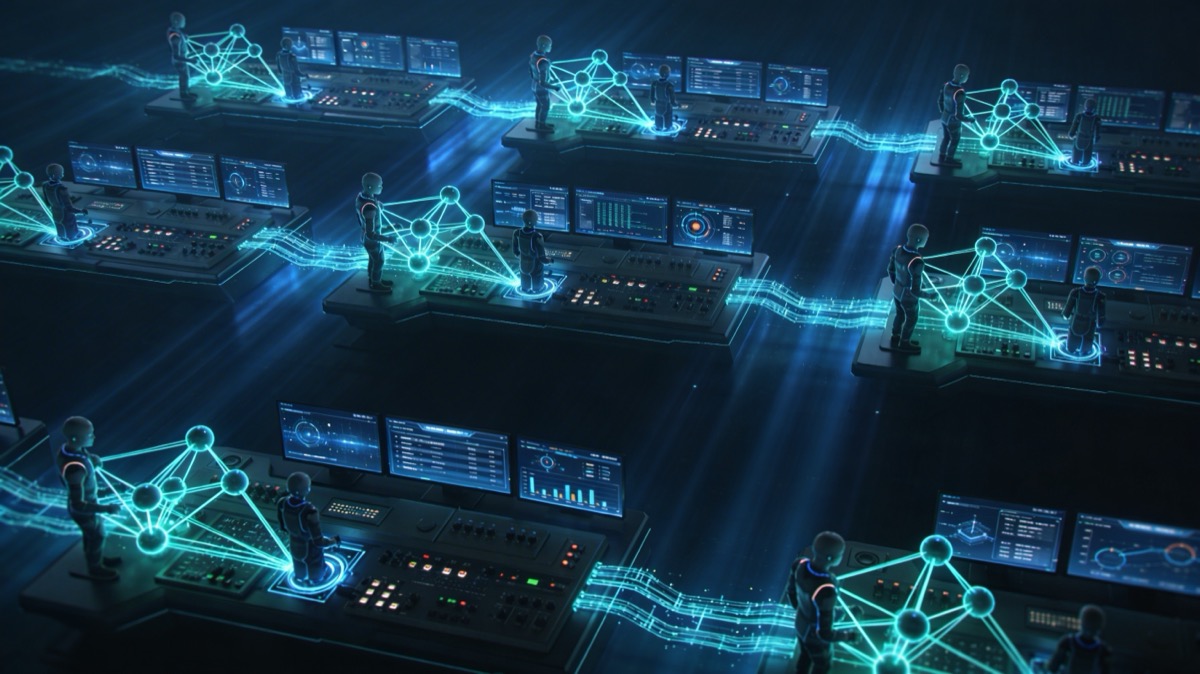
The other major feature is Agent Swarm. Instead of one agent doing everything sequentially, K2.6 can decompose a task into subtasks and execute them in parallel with up to 300 coordinated sub-agents across 4,000 simultaneous steps.
Examples of what a swarm can do:
- Large-scale research. One prompt asks to analyse 100 financial assets. The swarm creates specialised agents: one searches for data, another analyses, another generates the final report and presentation.
- Batch content generation. 100 sub-agents generate 100 customised landing pages in parallel, each with specific content for a client or product.
- Document processing. A swarm analyses 50 PDFs, extracts relevant data from each, and produces a consolidated report with a structured dataset.
Moonshot also introduced "Claw Groups" as a preview: a mode where humans and agents collaborate. The agent coordinates, detects when a sub-agent fails, reassigns tasks and manages the full delivery lifecycle.
Swarm is not for everything
The overhead of coordinating 300 agents is not worth it for tasks a single agent can solve in minutes. The swarm is designed for large, decomposable tasks that would take a single agent hours.
4. The numbers vs GPT-5.4 and Claude
K2.6's benchmarks are solid, especially in agentic tasks:
| Benchmark | Kimi K2.6 | GPT-5.4 | Claude Opus 4.6 | Gemini 3.1 Pro |
|---|---|---|---|---|
| HLE-Full w/ tools | 54.0 | 52.1 | 53.0 | 51.4 |
| BrowseComp | 83.2 | 82.7 | 83.7 | 85.9 |
| SWE-Bench Pro | 58.6 | 57.7 | 53.4 | 54.2 |
| SWE-Bench Verified | 80.2 | - | 80.6 | 80.6 |
| Terminal-Bench 2.0 | 66.7 | 65.4 | 65.4 | 68.5 |
| DeepSearchQA (f1) | 92.5 | 78.6 | 91.3 | 81.9 |
| GPQA Diamond | 90.5 | 92.8 | 91.3 | 94.3 |
Where K2.6 clearly wins: SWE-Bench Pro (real software tasks, not synthetic), HLE-Full with tools and DeepSearchQA. This makes sense: Moonshot trained K2.6 specifically for tasks that require many tool calls and sustained execution.
Where it falls behind: pure single-pass reasoning (GPQA Diamond, AIME) and vision tasks. For those, Gemini 3.1 Pro is still king.
5. The OpenClaw connection
This is especially relevant for us. At Delbion we already use and recommend OpenClaw as a multi-channel assistant (WhatsApp, Telegram, Discord). Moonshot explicitly cites OpenClaw as one of the environments where K2.6 performs best:
"K2.6 raises the bar for open-source models. It excels in coding and especially for agentic tools like OpenClaw and Hermes."
OpenClaw is a proactive agent that runs 24/7, executes code, manages calendars and operates across multiple platforms. K2.6 as a backend means: more stability in long sessions, better API interpretation, and more successful tool calls without intervention.
If you are evaluating OpenClaw for your company (and if you are a client of our AI agents training, you probably are), K2.6 is now the model Moonshot recommends for that specific use case.
6. What it means for an SME
K2.6 changes something very specific for SMEs: the duration of tasks you can automate.
Before K2.6: agents could solve tasks of 10-30 minutes. A 3-file refactor, a document summary, a complex email response. Useful, but limited.
With K2.6: agents can execute tasks of 12+ hours. Migrate a system, process 100 documents, analyse a large dataset, generate a 50-page report. All overnight, without supervision.
This dramatically expands the type of processes an SME can automate. Not just point tasks, but entire projects.
The 4 variants cover different needs:
- Instant: fast responses, no reasoning. For chatbots and autocomplete.
- Thinking: deep reasoning. For analysis, debugging, complex decisions.
- Agent: autonomous execution with tools. For research, document generation, multi-step workflows.
- Agent Swarm: 300 agents in parallel. For large, decomposable tasks.
Delbion data point
In our automatable process audits, 60% of the tasks SMEs want to automate take longer than 30 minutes. With previous models, that was unfeasible without supervision. K2.6 (and DeepSeek V4) change that equation. If you want to know which processes in your company can be automated now, we offer a free audit.
7. Costs, hardware and real limits
None of the above is free. Here are the real costs:
- Full self-hosting: needs 8x H100 or H200 GPUs for production. INT4 reduces this to 4x H100 with reduced context. This is not consumer hardware.
- Moonshot API: rates significantly lower than Claude Opus 4.6 and GPT-5.4. For workflows with thousands of tool calls, the difference compounds quickly.
- Modified MIT Licence: free use with one condition: if your product exceeds 100M monthly active users or $20M monthly revenue, you must display "Kimi K2" in the interface. For 99% of SMEs, this is irrelevant.
Limitations to keep in mind:
- Self-reported benchmarks. Moonshot re-evaluated some benchmarks under its own conditions. Independent validation will take weeks.
- Geopolitical context. Moonshot AI is a Chinese company. For regulated sectors (defence, energy, public administration), vendor jurisdiction may be a compliance factor.
- Demanding hardware. Unlike DeepSeek V4-Flash (13B active, runs on an RTX 4090), K2.6 needs enterprise infrastructure for self-hosting.
8. Verdict
Kimi K2.6 and DeepSeek V4, launched the same week, represent something that seemed impossible a year ago: two open-source models going toe-to-toe with the best closed models from OpenAI, Anthropic and Google.
If DeepSeek V4 stands out for cheap context (1M tokens), K2.6 stands out for long-duration autonomous execution (12h+, 300 agents). Together, they cover the two main gaps that prevented SMEs from adopting real AI agents: per-token cost and task duration.
The next step is not choosing a model. It is knowing which of your company's processes are worth automating, who will operate them, and how to measure the impact. That remains an organisational problem, not a technological one.
If you want to explore how AI agents can transform your business, we offer a free audit of automatable processes. No strings attached.
Your team needs secure AI training
The EU AI Act requires AI literacy for all staff from August 2026. Our courses cover compliance, AI agents and governance. FUNDAE can subsidise 100% of the cost.