There’s a part of digital work I never liked, but couldn’t avoid.
Looking for information. Comparing options. Opening websites. Accepting cookies. Filling out forms. Canceling services. Copying and pasting from here to there and then into an Excel sheet.
A slog that didn’t add value.
Over the past few weeks, I’ve started noticing something different. I’m more focused. I delegate. And that’s changing my relationship with the Internet.
Agentic browsing isn’t about finding better information.
It’s about saying, “I want this,” and having someone handle the path.
Sometimes I go make an herbal tea and, when I come back, I notice one of my screens is clicking on its own and showing me, on the side, the steps it’s taking. In the end, I get an Excel sheet with a summary of what it did.
A technical and mental shift.
Before, we opened tabs.
Now, we set objectives.
The agent doesn’t waste time, doesn’t get distracted, and has no patience for poorly designed processes. If something is confusing, slow, or unnecessarily complicated, it avoids it.
That “digital intern” can also fall victim to phishing, deception, or code injection. It could compromise the organization’s future without anyone realizing.
The first “digital interns” are already here
We’re not talking about the distant future. There are already some very interesting tools.
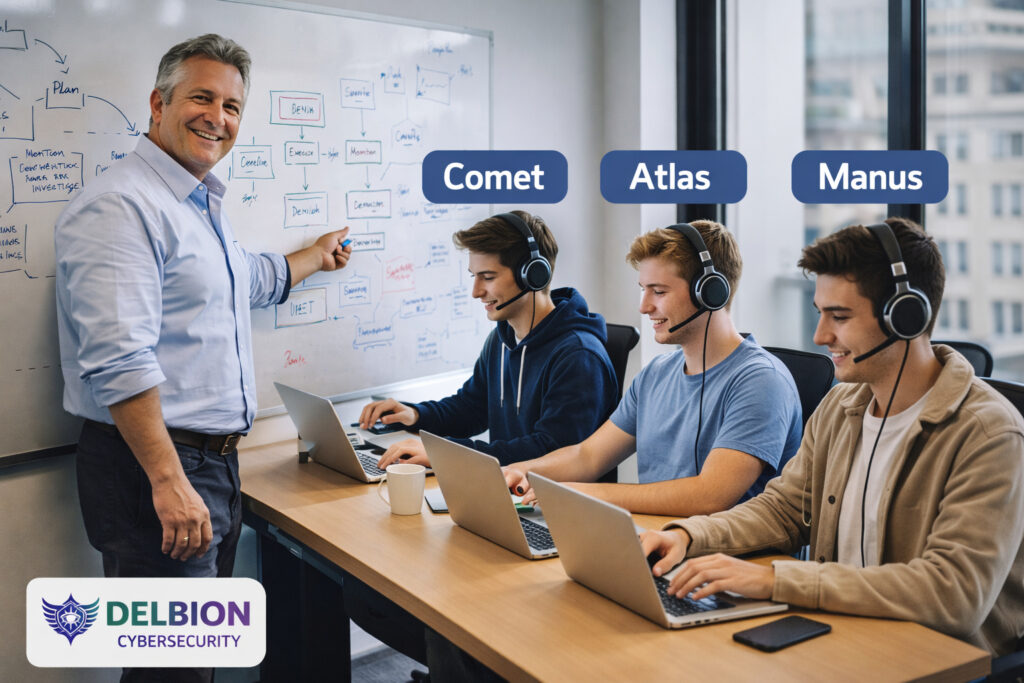
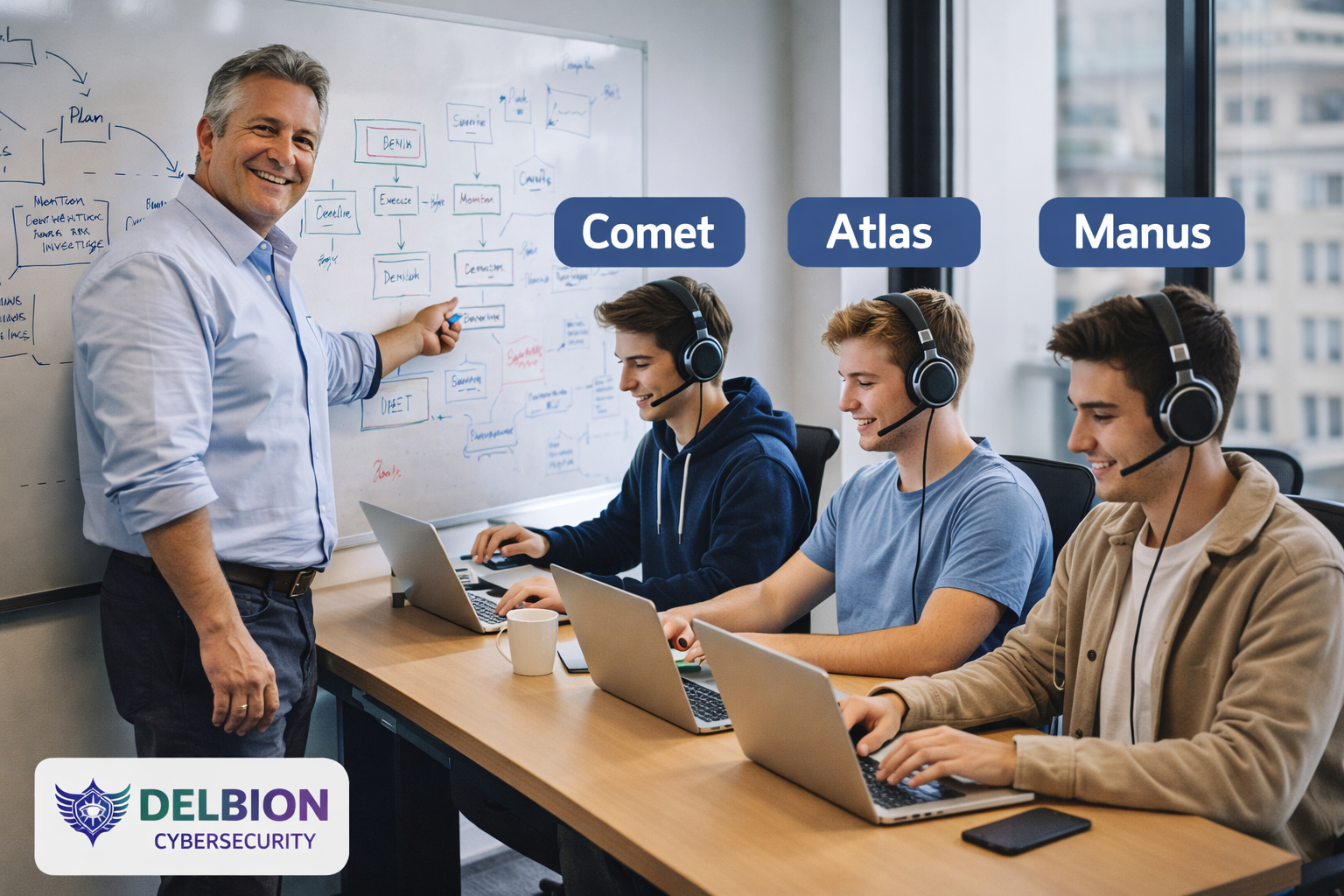
- Comet, designed to delegate real browsing and end-to-end tasks.
- Atlas, which combines browsing with decision structuring.
- Manus, capable of executing processes from start to finish using the web.
And the copilots built into browsers, which turn the browser into a tool for action, not just reading.
They’re all pointing to the same thing.
The Internet stops being a place we navigate and becomes an infrastructure someone uses on our behalf.
UX is no longer enough. AX is coming
For years we talked about user experience. Now another layer is emerging: Agent Experience.
- Clear processes.
- Simple flows.
- Understandable contracts.
Agents don’t negotiate with emotions.
They negotiate with structures.
And that forces a redesign of products, services, and business models.
It’s already happening and it can’t be stopped. The question worth asking is:
Is this digital intern secure?
This “digital intern” is using the same browser where you store passwords, confidential data, and your customers’ trust. And yes: the “digital intern” can also fall victim to phishing, deception, or code injection. It could compromise the organization’s future without anyone realizing.
Want to know more? Come to our free webinar.
In the coming days I’m going to dive deeper into this topic, with real examples and “digital interns,” in a free webinar.
Fill the form and I’ll notify you so you can join the next webinar on how to incorporate agentic browsing securely in your company.
FROM THE BLOG
Latest News
-
Agentic browsing: a few interns (for now) who save me hours of clicking around
Read more: Agentic browsing: a few interns (for now) who save me hours of clicking aroundThere’s a part of digital work I never liked, but couldn’t avoid.Looking for information. Comparing options. Opening websites. Accepting cookies. Filling out forms. Canceling services. Copying and pasting from here to there and then into an Excel sheet.…
-

Fitur 2026: Cybersecurity in the Hotel Industry: Key Risks, Real Impact and How to Protect Your Hotel
Read more: Fitur 2026: Cybersecurity in the Hotel Industry: Key Risks, Real Impact and How to Protect Your HotelFITUR 2026 once again brings the major challenges facing the hotel industry to the forefront: digitalisation, guest experience, operational efficiency… and, increasingly, cybersecurity. The adoption of cloud-based PMS, channel managers, contactless check-in, digital payments and process automation has…
-

AI Risks You Should Know About. Does Your Company Need an AI Strategy?
Read more: AI Risks You Should Know About. Does Your Company Need an AI Strategy?This week I got the call that always makes me uncomfortable: “Carlos, we’ve been asked for documentation about our AI systems and we don’t even know what we have or how to classify them. Can we get fined?”…